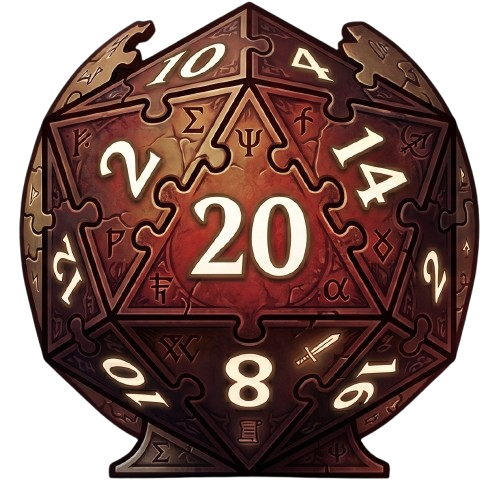
The Flame Below
The Flame Below is, per the pre-campaign world brief, the primordial force said to dream within the earth’s molten veins — the source from which the molten emberite is drawn that powers the Everflame Forges of Khaldun Forgehold. The brief is theological-shaped in its phrasing (“a primordial force said to dream”) and operationally specific in its consequence (the forges run on emberite channels drawn directly from the Flame Below). The Flame Below is the cosmological anchor of Khaldun’s industry and the implied cause of the Emberdeep mystery’s stirring imagery. Whether the Flame Below is metaphor (a poetic figure for geothermal-heat-and-magma), an entity in the deity sense (a sleeping god of fire), a primordial in the cosmological sense (a pre-divine elemental force), or some combination is unconfirmed in canon. The world brief leaves the framing deliberately ambiguous. This article documents the brief’s claim and the open question; it does not adjudicate the metaphysics.
Status: deliberately ambiguous
This article documents the world brief’s claim about the Flame Below and the open question that the brief itself sets up. The brief does not say what the Flame Below actually is. The phrasing is “a primordial force said to dream within the earth’s molten veins” — a sentence carefully placed between three different framings (metaphor, deity, primordial elemental) without committing to any of them.
This page is lore-type, not faction or location, and treats the Flame Below as a concept whose metaphysical status is one of the campaign’s tracked uncertainties. If a future session names it more specifically, this page is the first thing to update.
What the world brief says
The Flame Below appears in exactly one register in the world brief: as the source of the emberite that powers Khaldun. The brief’s load-bearing sentence:
Everflame forges line the main halls, each powered by channels of molten emberite drawn from the Flame Below — a primordial force said to dream within the earth’s molten veins.
Three things are claimed:
- The Flame Below is a force — not a person, not a place, not an institution. The grammatical handle the brief picks is “force,” with the modifier “primordial” attached.
- It dreams — the verb is choice, not accident. The brief could have said “rests,” “sleeps,” “stirs,” “burns.” It says “dream,” and then puts the dreaming in a specific location: “within the earth’s molten veins.”
- It is the source from which emberite is drawn — the practical line. The Everflame Forges’ fuel comes from the Flame Below; the emberite in the veins of the Emberpeak Mountains is, in some sense, an expression of it.
The “said to” hedge is also doing work. The brief is reporting the framing as the Khaldun reading, not as omniscient narration. The Flame Below “is said to dream” — the world brief is documenting what the dwarves of Khaldun believe about the Flame, not making a confirmed cosmological assertion about what the Flame actually is.
The three readings
The brief’s deliberate ambiguity supports three plausible readings. The article presents all three; the campaign has not adjudicated.
Reading 1 — metaphor
The Flame Below is a poetic figure for the geothermal and volcanic activity of the Emberpeak Mountains. “Primordial force” is a description of the heat-and-magma reality of being inside a volcano. “Said to dream within the earth’s molten veins” is dwarven cultural language wrapped around the empirical fact that the earth is hot, the veins are molten, and the heat does not go out.
In this reading, the Flame Below is real but not animate — it is geology, not entity. The Khaldun frame is theology-shaped because the dwarves take their craft seriously, not because the Flame is alive.
Reading 2 — entity / deity
The Flame Below is a god, or a being of equivalent ontological standing — a sleeping divine fire whose dreams shape the molten rock and whose presence is the source of emberite’s glow. The “primordial force said to dream” reads in this frame as accurate: the Flame is, literally, dreaming; the dreams take the form of molten veins; the Khaldun forges run on the Flame’s dream.
In this reading, the Khaldun oaths — “as long as their oaths remain unbroken, the Everflame will never die” — are oaths to the Flame Below itself. The relationship between the dwarves and the Flame is religious in the strict sense. The Emberdeep’s “voices” are then a candidate for direct utterance, either from the Flame or from something the Flame is dreaming about.
Reading 3 — primordial in the cosmological sense
The Flame Below is a pre-divine elemental force — older than gods, not a god, but at the cosmological tier where the line between “force” and “entity” gets blurry. The “primordial” framing is exact. The dreaming is the residual activity of a being that pre-dates the conditions under which “being” is a meaningful term.
In this reading, the Flame Below is the kind of entity the brief associates with Mharos-class horror — old, slow, slumbering, expressed through a host (in Mharos’s case, Vasquez; in the Flame’s case, the rock itself). The Khaldun confidence that the Flame “will never die” is, in this reading, the optimistic frame; the Emberdeep stirring is the pessimistic one.
The brief gives no instrument to rule any of the three out.
Functional role
Independent of metaphysical status, the Flame Below has a clear functional role in the world brief:
- It is the source of emberite. Whether by geological process (Reading 1) or by direct dreaming (Reading 2/3), emberite originates with the Flame and is drawn up from it.
- It is the fuel of the Everflame Forges. The channels of molten emberite run from the Flame Below to the forge halls; the forges’ sacred-and-continuous fires are sustained by the Flame’s continuity.
- It is the implied cosmological context of the Emberdeep. The deeper one descends, the closer to the Flame; the Emberdeep is the layer at which the brief’s “voices warning of something vast stirring in the molten dark” appear. Whether the “something vast” is the Flame itself, something the Flame is dreaming of, or something unrelated is the same ambiguity that runs through the Flame Below’s own metaphysics.
- It is the cosmological anchor of Khaldun’s institutional confidence. The “as long as their oaths remain unbroken, the Everflame will never die” line is the brief’s statement of the Khaldun-to-Flame compact: the dwarves keep their oaths; the Flame keeps burning.
Relationship to Khaldun
The Flame Below is, structurally, the non-political authority under which Khaldun operates. The Embermantle Clan rules the city; the Great Guilds of Khaldun govern daily life; the Flameguard enforce the rules; the Thane’s authority is absolute. Above all of them — in the cosmological-vertical sense, not the political-vertical sense — is the Flame Below, whose continuous existence is the precondition for the entire Khaldun project.
Whether Khaldun has a priesthood of the Flame is unspecified. The Runeworks use blessed oil in the quenching of enchanted weapons, which implies the existence of a sacral office; whether that office is the Flame Below’s clergy or something else is not stated. The Khaldun-cosmology gap is real, and the world brief does not fill it.
Open question
The Flame Below’s metaphysical status is one of the campaign’s tracked uncertainties. The brief’s deliberate ambiguity is the point: the question is meant to be answered (or deliberately left unanswered) by play, not by metadata.
If a future session names the Flame Below as a deity, an entity, or a geological force, the relevant pages to update are:
- This page — the lore framing.
- Emberite — the substance’s nature shifts depending on whether its glow is divine, dream-residual, or thermal.
- Emberdeep — the “voices” thread re-frames depending on what’s underneath.
- Khaldun Forgehold — the city’s institutional confidence in the Flame becomes either justified piety, dangerous self-deception, or routine resource-management.
This article is currently in the Open Question category and should remain so until the campaign provides further evidence.
Posture toward the party
None. The Flame Below does not know the party exists in any operational sense. The party does not know the Flame Below exists beyond the world-brief framing. If a future arc swings toward the Emberpeak Mountains — especially toward the Emberdeep — the Flame Below shifts from background lore to active question.
Status as of session 16
Off-screen. Dreaming (per the brief’s framing). Continuous. The forges continue to run on emberite drawn from the Flame; the Emberdeep continues to whisper; the dwarves continue to ignore the whispers; the oaths continue to hold. Whether the Flame’s nature is one day named in transcript, or whether it remains a deliberately seeded cosmological hint, is itself one of the questions Open Threads tracks.
See also
- Khaldun Forgehold
- Emberpeak Mountains
- Emberite
- Emberdeep
- Everflame Forges
- Runeworks
- Embermantle Clan
- Great Guilds of Khaldun
- Open Threads
References
- ^ — DM world brief only; not yet appeared in any recap.